Table of Contents
Trump Housing Investor Ban
President Trump’s housing investor ban is making headlines across the US. Many families are wondering how this plan will affect single-family home ownership and overall housing affordability.
1. Introduction
Owning a home has always been a big part of the American Dream. It means security, stability, and a place for your family. But if you are like many people today, you might have noticed how hard it is to buy a house. Prices keep rising, mortgages are higher, and rent is getting expensive. It can feel impossible to get your first home, especially if you are young.
Recently, President Donald Trump made an announcement that grabbed a lot of attention. He said he plans to ban big companies and institutional investors from buying single-family homes. His point was simple: homes are for people, not corporations. This blog will break down what he said, why it matters, and what it could mean for you if you are trying to buy a home.
For more on this announcement, you can check the official coverage here AP News.
2. What Trump Said About the Housing Investor Ban
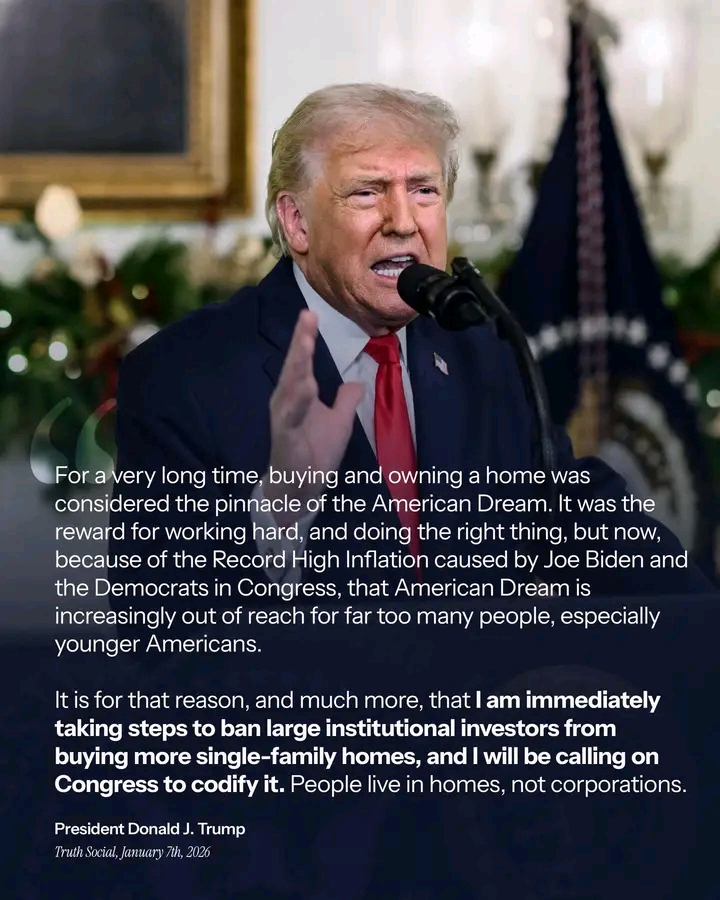
President Trump said the housing investor ban is necessary because buying and owning a home was once the ultimate sign of success for American families. Today, rising home prices, inflation, and high mortgage rates are making that dream harder to reach for many people.
While explaining the Trump housing investor ban, he said his administration plans to stop large institutional investors from buying more single-family homes and will ask Congress to turn this proposal into law. His main argument is that housing should first serve people who want to live in homes, not corporations seeking profit.
He summed it up clearly by saying, “People live in homes, not corporations.” Trump also noted that he would expand on the Trump housing investor ban and other housing policies during an upcoming speech at the World Economic Forum in Davos. More details can be found here on Forbes.
It is important to understand that the Trump housing investor ban is still a proposal. No law has been passed yet, but Trump says the plan is aimed at making homeownership more achievable for ordinary Americans.
3. Why Housing Is a National Issue
Housing affordability has become more than just a local problem. Across many states, house prices have gone up faster than wages. Mortgage rates are higher, making monthly payments larger even for modest homes. Rent is also rising, which makes it harder to save for a down payment.
For a lot of families, housing costs take a big part of their income. That leaves less money for savings or emergencies. When homes are too expensive, it affects more than just where you live. It can delay having a family, make it hard to move for work, and add stress to daily life. These challenges hit first-time buyers the hardest.
For context on U.S. housing trends, you can check Investopedia.

4. Who Are Institutional Investors
So, who are these institutional investors Trump is talking about? They are large companies like private equity firms, real estate investment trusts, or big asset managers. These organizations buy houses in bulk and rent them out for profit.
Unlike someone buying a home to live in, these investors buy for money. They can pay cash, act quickly, and sometimes offer higher prices than regular buyers. Some big names in this space include Invitation Homes, American Homes 4 Rent, and Progress Residential. You can read more about institutional investors here Investopedia on Investors.
5. How Much of the Housing Market They Control
When discussing the Trump housing investor ban, many people assume institutional investors control most homes in the United States. In reality, on a national level, these investors own a relatively small share compared to individual homeowners. However, the impact feels much bigger in certain cities and neighborhoods.
Data cited in debates around the Trump housing investor ban shows that institutional investors own roughly 1 to 3 percent of all single-family homes nationwide. This information comes from a report by the US Government Accountability Office. The majority of homes are still owned by individuals and small-scale landlords.
The real concern behind the Trump housing investor ban is that in fast-growing cities, institutional investors often account for a much larger share of home purchases. In these areas, their ability to buy quickly and pay cash can push prices higher and make it harder for regular families to compete.
6. Why This Affects Younger Americans
Trump mentioned younger Americans specifically, and there is a reason for that. Many young adults today are entering the workforce with student loans and facing higher rent. Home prices are rising faster than what they can save.
The median age for first-time homebuyers is now around 40 years old, which is higher than it used to be. Younger families are often delayed in buying a home because they cannot save enough for a down payment. This creates frustration and makes housing a big political and social topic. For reference see New York Post.
7. Economic and Legal Realities
Implementing a ban on institutional investors is not simple. Congress would need to pass a law, and the rules would have to clearly define what counts as an institutional investor. Property rights and market laws make this a complicated issue.
Many experts also say that while institutional investors affect affordability, they are not the only problem. Supply shortages, zoning laws, and construction delays also play a big role. For more research see LiveMint.
8. How the Market Reacted
After Trump’s announcement, shares of big companies that rent houses dropped slightly. Investors are paying attention because even a proposal like this can affect the market. Some say limiting institutional buyers could help families buy homes, while others worry it might slow new housing development.
It shows that housing affects everyone, from people trying to buy a first home to large companies and the economy as a whole.
9. Broader Policy Debate and Alternatives
Experts argue that banning institutional investors alone may not solve the housing crisis. Building more houses, improving zoning laws, and making affordable housing more available could help more in the long run.
A report from the Urban Institute explains that increasing housing supply and reducing regulations may be more effective than banning investors. It’s a bigger problem than any single policy can fix.
10. Conclusion
The Trump housing investor ban has generated strong reactions across the country because it touches a real issue many Americans are facing. Home prices are rising, mortgage rates are high, and owning a home feels out of reach for many families, especially first-time buyers.
While institutional investors are only one part of the housing challenge, the Trump housing investor ban has helped shift attention to deeper problems like limited housing supply, affordability, and long-term policy solutions. For anyone trying to buy a home today, this proposal shows how government decisions can directly affect everyday life and financial stability.
External References
- Government analysis of institutional investor housing share:
House Docs PDF - Trump housing proposal report:
AP News - Reuters summary on Trump investor ban plan:
GV Wire / Reuters