How To Use AI
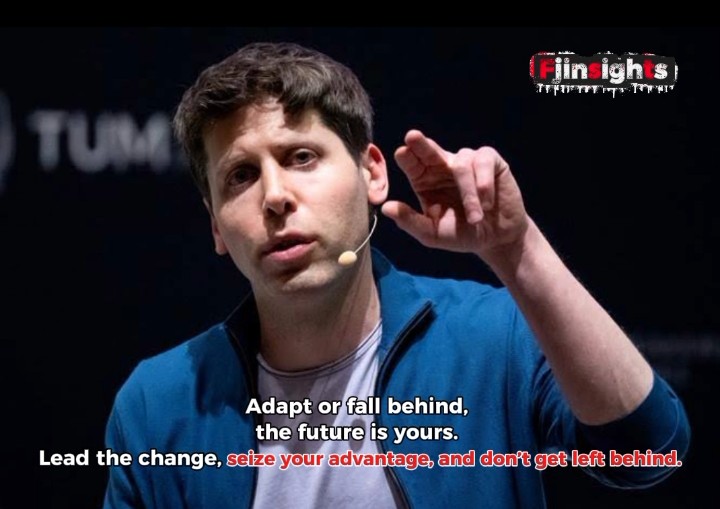
Sam Altman Just Warned Us If You Don’t Evolve Now, Others Will Leave You Behind.
📖 In This Guide
- Step 1: Choose One AI Tool
- Step 2: Apply It to Tasks You Already Do
- Step 3: Practice Daily
- Step 4: Use Simple Prompts
- Step 5: Track Results
- Step 6: Take on Bigger Projects
- Step 7: Share and Teach
- Step 8: Keep Learning
- The Growth Mindset for AI Success
- Final Takeaway
The world is changing faster than most people realize, and the gap between those who rise and those who fall is no longer about talent or luck it’s about adaptability. Sam Altman, CEO of OpenAI, recently said, “The future belongs to those who know how to work with AI, not against it.” He didn’t mean you need to become a tech expert or a coder. He meant that those who learn to use AI as a tool will have a massive advantage, while those who resist change risk being left behind.
AI is not here to replace humans; it is here to assist. It speeds up thinking, organizes ideas, handles repetitive work, and allows you to focus on creativity, strategy, and growth. But your creativity, judgment, and human insight remain irreplaceable. The real danger is not AI itself it’s staying the same while the world evolves around you.
The truth is simple, you don’t need to know everything. You only need to start. Those who are winning today are not the smartest or the most talented. They are the ones willing to learn, adapt, and take action. Combining your creativity with AI gives you speed, clarity, and productivity that others can only dream of.
Here’s a practical step-by-step plan to thrive in this new era:
Step 1: Choose One AI Tool
Pick a single tool to start with, such as ChatGPT for writing and brainstorming, Canva AI for design, or Gemini for research. Focus on mastering one tool first rather than overwhelming yourself with too many.
Step 2: Apply It to Tasks You Already Do: Use AI to enhance something familiar. If you create content, let it help you write posts or headlines. If you teach, let it help plan lessons. If you run a business, use it for brainstorming ideas or organizing projects. Start small to build confidence.
Step 3: Practice Daily
Practice Daily: Spend 10–15 minutes each day using AI on real tasks. Consistency is far more effective than trying to learn everything at once.
Step 4: Use Simple Prompts
Begin with easy commands like: “Rewrite this paragraph to be clear and bold,” “Give me five headline options on [topic],” or “Summarize this into bullet points.” This makes AI practical and actionable from day one.
Step 5: Track Results
Observe improvements in your work, creativity, or productivity. Measure time saved, engagement received, or clarity achieved. Tracking results reinforces learning and builds momentum.
Step 6: Take on Bigger Projects
After a week or two, use AI for larger tasks such as creating a mini guide, a lesson series, a content batch, or a project outline. Break bigger tasks into manageable pieces and let AI assist with each part.
Explain what you’ve learned to a friend, colleague, or follower. Teaching solidifies your understanding and increases your confidence in using AI effectively.
Step 8: Keep Learning
Once you feel comfortable with one tool, gradually explore more advanced features or other AI tools. Continue improving your prompts, testing new ways to work smarter, and building skills that multiply your results.
The key takeaway is this, AI is not the future of work it is the present. The people who rise today are the ones willing to adapt, learn, and integrate AI into their daily lives. Your creativity combined with AI gives you an edge that is nearly unstoppable. The future does not wait, and those who act now will define it.
Thriving in the Age of AI is not about being perfect. It’s about being adaptable, willing to learn, and ready to leverage new tools to amplify your strengths. Start small, stay consistent, and over time, the results will speak for themselves.
But beyond tools and technology, something deeper is needed…
a mindset that embraces change instead of fearing it. The people who succeed in this new era are not the smartest or the most talented. They are the ones who stay open-minded, flexible, and hungry to grow.
In the present world today, everything changes fast. New apps, new systems, new platforms, new ways of working and sometimes it can feel overwhelming. But if you look closely, every change brings a new opportunity. Every new idea opens another door. The question is: Will you adjust? Will you learn? Will you stretch yourself just a little more?
Albert Einstein once said, “The measure of intelligence is the ability to change.” That quote is more relevant today than ever before. You don’t need to know everything. You only need to be willing to learn something new every day. http://Albert Einstein
1. Understanding That Growth Is a Daily Habit
Many people believe growth happens suddenly, but that’s not true. Growth is a series of small steps the five-minute lessons, the new skills you try, the tiny tasks you complete even when you don’t feel like it. Over time, these little steps begin to shape a new version of you.
Think about how you learned anything in the past riding a bicycle, using a computer, cooking, or even driving. You didn’t master those things in one day. The same applies to AI tools, online learning, digital skills, or any new path you want to follow.
James Clear, author of Atomic Habits, once wrote, “Every action you take is a vote for the person you wish to become.”
So ask yourself:
Are your daily actions supporting the future you want?
Or are you still depending on old habits that no longer fit this new world?
2. Don’t Fear the Unknown Explore It
A lot of people hold themselves back because they think AI will replace them. But here is the simple truth: AI will not replace people. People who know how to use AI will replace people who refuse to learn.
You don’t need to become a tech expert. You just need curiosity. Curiosity is the fuel that keeps you moving, learning, and experimenting.
When you explore new tools, you begin to see possibilities that others are blind to. For example:
A writer can use AI to brainstorm ideas faster.
A student can use it to understand difficult topics.
A business owner can use it to improve customer service.
A creative person can use it to design, edit, or plan projects.
Exploration brings clarity. Clarity brings confidence. And confidence makes you unstoppable.
3. Focus on Progress, Not Perfection
One major mistake people make is thinking everything must be perfect before they start. They want the perfect plan, the perfect timing, or the perfect knowledge. But waiting for perfection only delays progress.
The world is already moving. Technology will not wait. Opportunities will not wait. Growth will not wait.
The late Steve Jobs once said, “Real artists ship.” Meaning: stop overthinking and start doing. http://Steven jobs
You grow by trying, not by waiting.
Even if you don’t understand everything at first, keep going. The more you practice, the more everything begins to make sense.
4. Upgrade Your Mind Before You Upgrade Your Skills
The age of AI is not only about tools it’s about mindset. If your mindset is stuck in the past, even the best skills won’t help you. But if your mind is open and ready, you will naturally find new skills to learn.
Here are simple mindset shifts you need:
Instead of saying “I don’t know this,” say “I can learn this.”
Instead of saying “This is too much,” say “I’ll start with one small part.”
Instead of saying “I’m not ready,” say “I’m willing to grow.”
A flexible mind will always find a way forward.
5. Be Consistent Even When You Don’t See Results Immediately
Growth sometimes feels slow. You may learn something today and not see the impact until weeks or months later. But do not give up. Every time you learn a new skill, you add another brick to your future.
Warren Buffett once said, “Someone is sitting in the shade today because someone planted a tree a long time ago.” http://Warren Buffett
Your learning, your efforts, your curiosity these are the seeds.
Your future success that is the tree.
Learning one skill may not change your life instantly, but it sets you on a new path that keeps opening bigger doors.
6. Surround Yourself With Learning, Not Complaining
Who you listen to shapes who you become. If you stay around people who complain, fear technology, or resist growth, you will absorb their limitations.
But if you spend time following creators, experts, teachers, and innovators, your mind will expand. You will begin to see opportunities instead of problems.
Growth is contagious when you surround yourself with the right people.
7. Your Future Success Depends on What You Do Now
The age of AI is not the future it is already here. The earlier you start learning how to use it, the more valuable you become. Your job, your business, your creativity, your ideas AI can multiply all of them.
But the real power lies in your willingness to grow.
If you choose growth, nothing can stop you.
If you choose fear, nothing can help you.
The world is changing quickly, but you can rise with it. You can become more skilled, more confident, more prepared, and more successful one step at a time.
On the final note;
The age of AI belongs to those who are willing to learn, unlearn, and relearn. You don’t need perfection. You don’t need to understand everything. You just need the courage to start and the consistency to keep going.
Remember the words of Nelson Mandela:
“It always seems impossible until it’s done.”
If you stay open, adaptable, and ready to grow, you will not only survive in this new era you will thrive.
And the best time to start is now.